
Groov vs Superfeet ME3D
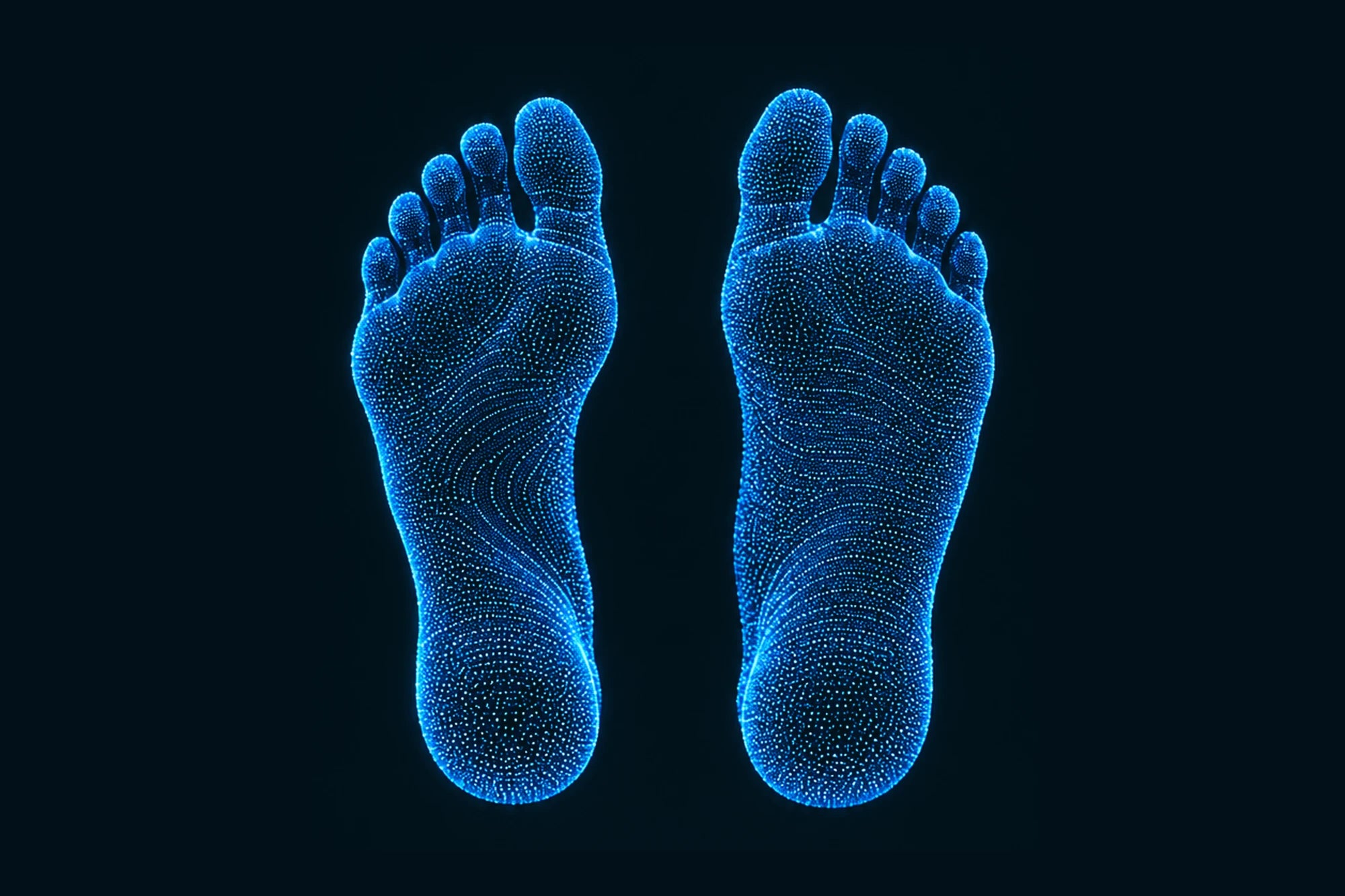
Both start with an iPhone scan. ME3D's sees the inside of your foot, standing. Groov's also maps the underside, with no weight on it, to find your foot's relaxed position.
Short answer. Choose Superfeet ME3D for the lower price (from $109.99), a longer guarantee (60 days) or an in-store scan. Choose Groov for an insole built around your foot, not just your footprint: the way your foot wants to be positioned before your weight lands on it. It comes in a choice of models, and Shoe-Specific pairs are built for the shoes you already own.
Full disclosure: we make Groov. Superfeet facts come from its own site and its June 2026 announcement, checked October 26, 2026, plus our own test of ME3D's phone scan that day.
Side by side
| Compared | Groov | Superfeet ME3D |
|---|---|---|
| Price per pair | $149, General Purpose or Shoe-Specific; less per pair on multi-pair orders | $109.99; $139.99 with Max foam |
| How you scan | Any iPhone with Face ID, at home, no app | iPhone 13 or newer on iOS 26, no app; or in store at select run shops |
| What's personalized | Over 30,000 points per foot, captured standing and with no weight on it, left and right built separately; Shoe-Specific adds your shoe's insert | Arch shape, lattice thickness by body mass, and length in whole sizes (half sizes may need trimming) |
| How it's made | Semi-rigid carbon-composite plating; cushioning chosen for the model (memory foam in the Everyday); not 3D-printed | 3D-printed support cap with foam cushioning |
| Thickness | 3 mm (Luxe), 4 mm (Response), 5 mm (Everyday)  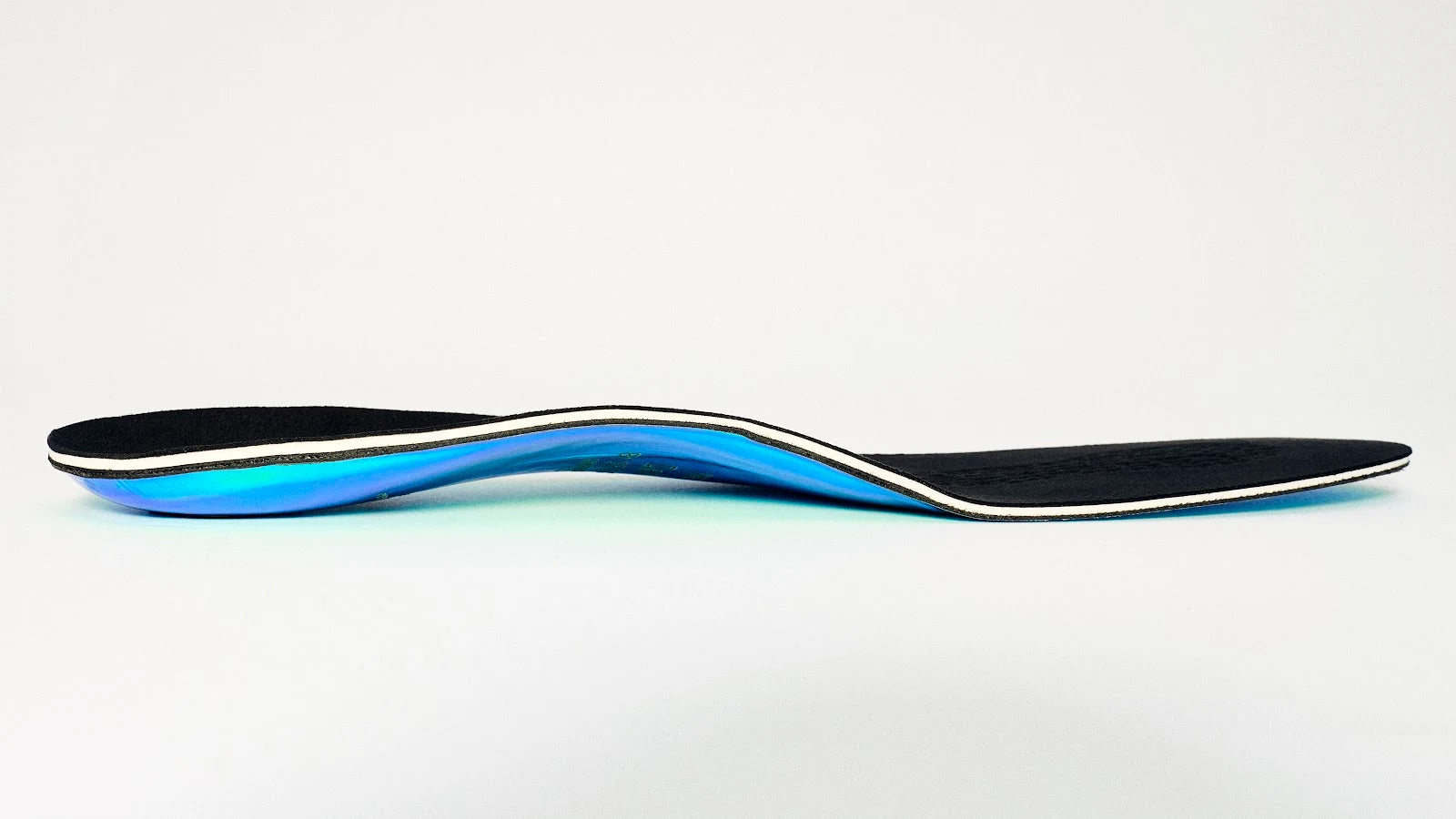 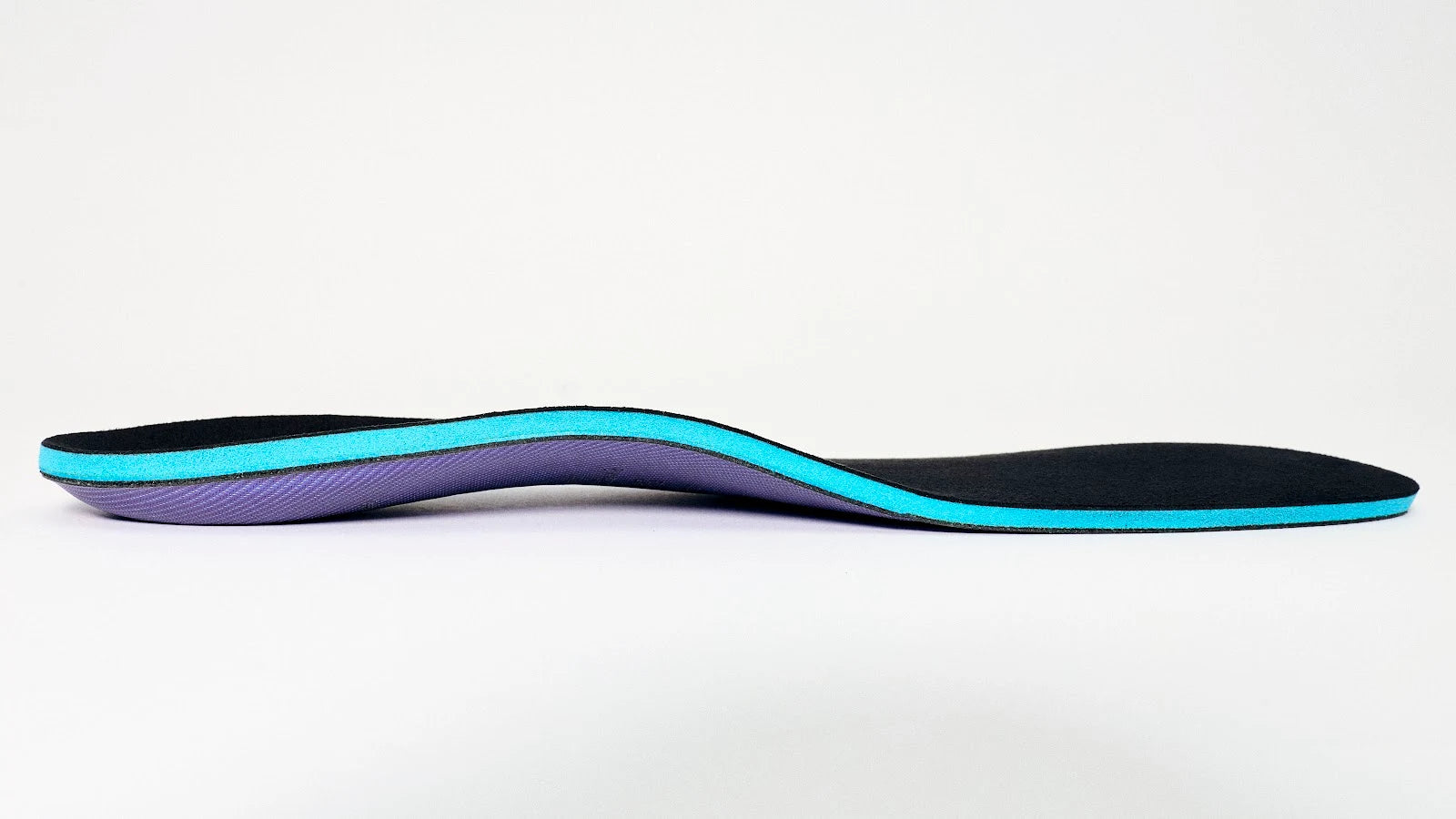 | 4.5 mm; 6.5 mm with Max foam |
| Delivery | About a week | 5–10 business days |
| If it doesn't work out | 30-day money-back guarantee; free shipping both ways | 60-day guarantee |
What actually differs
In our test on Oct 26, 2026, ME3D's phone scan captured one view of each foot: the inside, standing. Superfeet says it uses three inputs to personalize the insole: your arch shape, your body mass (which sets the lattice thickness) and your foot length, in whole sizes. Groov's ShapeSense™ scan captures over 30,000 points per foot, left and right separately: the inside and top of the foot standing (the top shows how it spreads under your weight), and the underside with no weight on it. Your arch changes shape when you stand on it, so we measure both. Then our contour-optimization engine, which won Wharton's 2023 Khan Family AI for Business Award, turns that scan into an insole shaped around your foot.
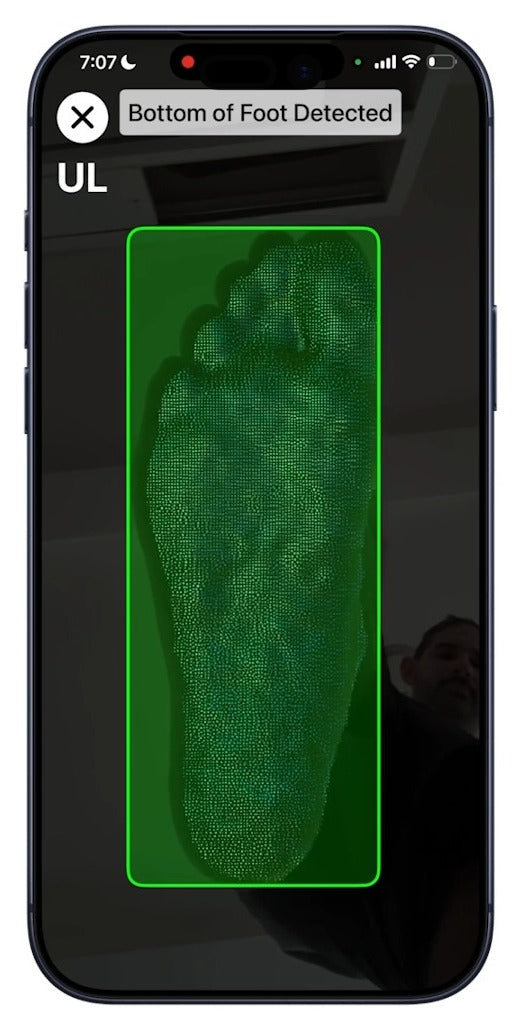

ME3D is built to your foot. Groov's Shoe-Specific option scans your shoe's own insert, so the insole drops in without trimming. That matters in cleats, ski boots and dress shoes, where there's little room to spare.
ME3D pairs a 3D-printed lattice cap with foam cushioning. Groov isn't 3D-printed: each pair is shaped from your scan on semi-rigid carbon-composite plating, with cushioning chosen for the model, such as memory foam in the Everyday.
ME3D costs $109.99 to $139.99 and gives you 60 days. Groov is $149 with a 30-day money-back guarantee and free shipping both ways. There's no entry-level Groov. Every model is built from your scan, because we make what's right for your foot, not what's close enough. For most Groov wearers we surveyed, there was no break-in to wait out: 88% reported none (internal case studies; data self-reported).
ME3D needs an iPhone 13 or newer on iOS 26, or a visit to a participating run shop. Groov works on any iPhone with Face ID. ME3D arrives in 5 to 10 business days; Groov, in about a week.
Which one fits you
First, what an insole can't do. If you have a diagnosed condition, or pain that's getting worse, see a podiatrist.
- Lower price, longer guarantee: Superfeet ME3D, from $109.99, with a 60-day guarantee.
- You'd rather be scanned in person: ME3D, at select run shops listed in Superfeet's ME3D store locator.
- Each foot scanned standing and with no weight on it: Groov, at $149. Shoe-Specific pairs match your shoe's insert. Requires an iPhone with Face ID; 30-day guarantee.
Why people choose Groov
Top-rated: GearJunkie gave the Everyday an 8.8/10, a score fewer than 10% of products it tests reach (rating scale).
Award-winning: MyGolfSpy named Groov one of 25 products in its Best of Golf Awards 2025, and its lead product reviewer called it his footwear product of the year.
Loved by wearers: 88% of surveyed Groov wearers reported no break-in, and 94% preferred their Groovs to insoles they'd worn before (internal case studies; data self-reported).
Trusted by foot doctors: Dr. Krista Archer, DPM, a board-certified podiatrist in New York, is Groov's clinical advisor. Dr. John Kennedy, a New York foot and ankle surgeon, is a Groov investor. Both practices refer patients to Groov.
FAQ
Is ME3D a custom insole?
Yes. It's built from your scan and personalized on arch shape, body mass and length.
Which phones work?
Groov works on any iPhone with Face ID, no app needed. ME3D needs an iPhone 13 or newer on iOS 26, no app, or a scan at a participating store.
Is a 3D-printed insole better?
Not by itself. 3D printing is a way to make an insole, not a reason it fits. Printing makes intricate shapes easy but limits which materials you can combine. Groov isn't printed, so each pair can combine semi-rigid carbon-composite plating with cushioning matched to the model.
How firm is Groov?
Every Groov model has semi-rigid carbon-composite plating. It cradles the unique shape of your foot, captured by your scan, while letting energy carry from one step into the next. For a fully rigid shell like a plaster-cast prescription orthotic, a podiatrist is the closer match.
Can one pair move between shoes?
A General Purpose Groov moves between most everyday shoes. A Shoe-Specific Groov is built for one shoe's insert, at the same $149.
Are they HSA/FSA eligible?
Groov insoles are HSA/FSA eligible. Superfeet says its insoles are HSA/FSA eligible in most cases.
Why does Groov scan the foot with no weight on it?
Because standing changes your foot's shape. With no weight on it, the scan shows how your foot wants to be positioned before your weight lands on it. A foot that looks flat when you stand may not be flat at rest. Podiatrists have long made custom orthotics from casts of the foot taken with no weight on it; in the best-known method, Dr. Merton Root's, the clinician holds the foot in a set position. Groov's scan doesn't replace that cast. It captures your foot at rest with your iPhone, along with your foot standing, and builds your insole around both.
Your foot isn't a problem to fix. It's a shape to build around. Built to your feet, and with Shoe-Specific, to your shoes. Not to an average, and not to a size. $149 a pair, delivered in about a week, with a 30-day money-back guarantee.
Shop Groov